The International Secretariat of Amnesty International publishes its own website, with country specific news and campaigns. Do check out the Brazil page.
Amnesty’s 2025 report on Brazil (published April 2026)
Amnesty’s Annual Report on Brazil highlighted that poverty levels decreased significantly, mainly due to income-transfer policies, but structural inequalities persisted and access to human rights was compromised. Vulnerable populations, especially Black and low-income people, were disproportionately affected by extreme weather events. The approval of a new environmental law and other legislation exacerbated regressions in environmental policies and the territorial rights of Indigenous Peoples and traditional communities. Violence against human rights defenders intensified, in particular for environmental, Indigenous and Quilombola defenders. Police violence persisted, disproportionately affecting the Black population. Violence against LGBTI people and gender-based violence, particularly feminicides of Black women, continued to be of serious concern. Difficulties in accessing justice, particularly in cases of police violence, continued to undermine state accountability.
Significant Events from Newsletters 2026
September 2026
Amnesty International has warned that Meta may be failing to effectively address election-related disinformation spread through its Facebook Advertisements platform ahead of Brazil’s presidential election on 4 October. Social media has been used to spread disinformation in Brazil for years. To investigate how Facebook handled election-related disinformation in advertising, Amnesty International conducted an experiment by submitting ‘mock’ ads containing election-related disinformation to Facebook. The experiment found that eight of the submitted ads were accepted, while the remaining seven were flagged for identity verification because they appeared to be related to a social issue, election, or politics, rather than being rejected specifically for containing election-related disinformation. Amnesty ensured that these test ads did not go live.
July 2026
The Public Prosecutor’s Office of the State of Bahia (MPBA) has requested to close an investigation into the death of human rights defender Pedro Henrique Cruz, almost eight years after he was brutally murdered in 2018 in Tucano, Bahia. This decision represents another chapter in a process marked by the absence of effective responses from the Brazilian State to Pedro Henrique’s family and the inability of responsible institutions to guarantee truth, justice, and reparation.
The MPBA claims that it did not gather sufficient evidence to identify and hold the perpetrators of the crime accountable. However, this claim demands that the relevant institutions explain why the murder of a human rights defender remains unsolved after almost a decade of investigation. Amnesty International Brazil is mounting a coordinated public and institutional response to denounce the request to close the case. You can read more here.
June 2026
Brazil has postponed a new reform which would require prosecutors — not the police — to lead investigations into police killings and ensure they meet international standards. The implementation has been delayed by one year. Human Rights Watch reports that 2025 was the deadliest year on record for police violence, with 6,588 killings. It warns that current investigations often have very serious shortcomings and calls for independent investigations into police abuses. Read more here.
March 2026
JUSTICE SERVED! After eight years of relentless campaigning, justice has finally been served! The masterminds behind the murder of human rights defender Marielle Franco, her driver Anderson Gomes, and the attempted murder of her aide Fernanda Chaves, have been sentenced to 76 years in prison, with fines and compensation to be paid to the families and survivors. Two military police officers (who worked with the masterminds) and the then chief of police and former secretary of the Civil Police of the state of Rio de Janeiro were also convicted.
During this trial, Amnesty International was cited for its mobilisation, especially for the welcome given by AI Spain to the survivor and her family. Many of you will have also contributed to this success! Thank you!
February 2026
Thiago Menezes Flausino was 13 years old when he was shot and killed during a police operation in Rio de Janeiro, Brazil. On August 7, 2023, he was riding on the back of a motorcycle when he was hit by several bullets. Four police officers were identified as involved in Thiago’s death. Following the killing, the officers were also accused of tampering with evidence, as they attempted to plant a firearm at the scene to claim there had been an armed confrontation leading to Thiago’s death.
In June 2025, the Court of Justice ordered the release of two police officers, ruling that they had not directly participated in the shooting. The two remaining officers, who admitted in their testimony to having fired shots at Thiago, were scheduled to face a jury trial on January 27, 2026. However, the jury was adjourned, and the trail did not take place. For Thiago’s family, who have been waiting for justice for almost three years, this postponement is a form of institutional violence.
A guilty verdict for the officers who admitted to shooting him is essential to challenge the endemic impunity for extrajudicial executions and police violence in favelas. The court must ensure a fully fair and transparent trial, free from bias that could perpetuate impunity for police violence. Amnesty International continues to fight for justice for Thiago, and for all those who are still waiting for the state to answer for their crimes.
January 2026
Tens of thousands of women have marched in cities across Brazil, denouncing femicide and gender-based violence, after a series of high-profile cases that shocked the country. Last year, 1,492 women were victims of femicide, the highest number since a law recognising the crime of femicide was introduced in 2015. More women are speaking out against violence targeting them. Read more here.
Significant Events from Newsletters 2025
December 2025
The global mining company BHP Group has been found liable for the deadly 2015 collapse of a Brazilian dam, in a landmark ruling that could pave the way for a multibillion-dollar payout. The collapse, which led to Brazil’s worst environmental disaster, unleashed tonnes of toxic waste into a major river, killing 19 people and devastating villages downstream. The trial, which began in October last year, was filed in Britain because one of BHP’s two main legal entities was based in London at the time.
November 2025
Amnesty International and 43 other organizations released a joint letter welcoming the publication of the agreement between the Brazilian government and the UN Framework Convention on Climate Change (UNFCCC) on hosting the COP30 climate conference in Belem, Brazil, between November 10-21, 2025, saying it marks a positive step for transparency. While the agreement includes a commitment to uphold human rights, Amnesty has raised concerns that it does not explicitly safeguard the rights to freedom of expression and peaceful assembly outside the official “Blue Zone”. They also flagged that sponsorship rules appear weakened, which could allow fossil‑fuel or other companies whose activities conflict with climate goals to gain undue influence, and urged for strong public disclosure of sponsorships and partnerships.
A recent large-scale police operation in Rio de Janeiro’s favelas left one of the highest death tolls in the city’s history. Thousands of security agents, including military police and special units, engaged in fierce gunfights using armoured vehicles and drones. The International Federation for Human Rights warned that the operation reflected Brazil’s deeply entrenched security strategy, which disproportionately targets Afro-descendant and poor communities and perpetuates cycles of lethal force and impunity. Human Rights Watch reported serious investigative failures, including mishandling of crime scenes and evidence, and urged authorities to conduct prompt, thorough, and independent investigations into each of the killings.
August 2025
Amnesty called on President Lula da Silva to veto the ‘Devastation’ bill, approved on 17 July by Brazil’s Congress without public debate and transparency. The bill drastically weakens environmental licensing and undermines critical environmental institutions. It threatens the right to a clean, healthy and sustainable environment, the rights to access to information, public participation and access to justice, as well as the rights of Indigenous Peoples and climate justice.
June 2025

Amnesty has joined a multitude of other non-governmental organisations in calling on the Brazilian Government to use its position as host of COP30 to lead influence climate negotiations and establish best practice for future COP hosts and advance the participation of those who have long been at the forefront of the fight against climate change, including environmental and human rights defenders.
Significant Events from Newsletters 2024
December 2024
Amnesty International has launched a petition for Brazil to put in place an effective national policy of protection of Human Rights Defenders, Communicators and Environmentalists. In 2023, Frontline Defenders estimates that 24 human rights defenders were killed in Brazil, more than any other country after Colombia and Mexico. Please sign it and send a copy to the Ambassador, Antonio de Aguiar Patriota, email: ambassador.london@itamaraty.gov.br Embassy of Brazil to the UK 14-16 Cockspur Street London SW1Y 5BL.
November 2024
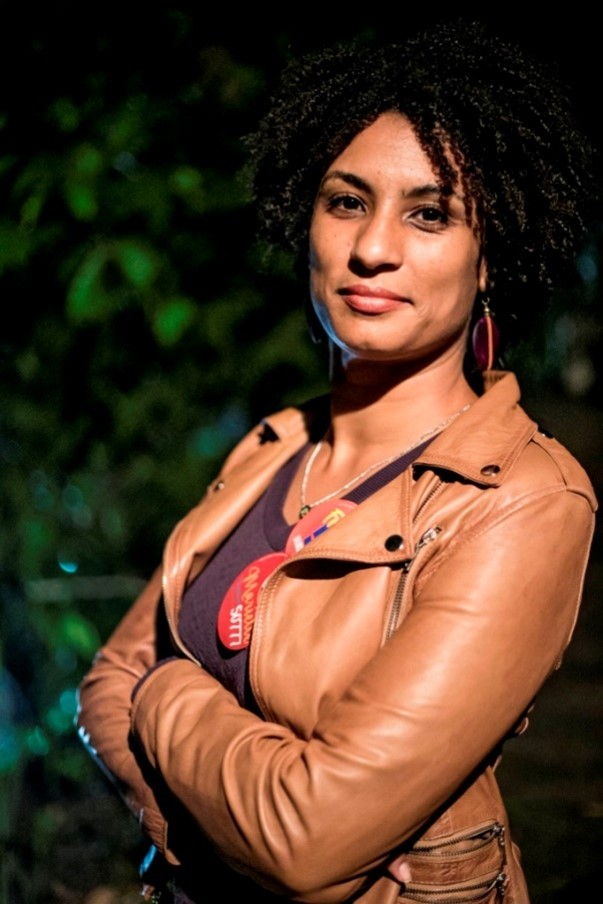
Marielle Franco (1979-2018)
Amnesty International has issued a press release on the possible reasons why after six years of the murder of council woman Marielle Franco and her driver, Anderson Gomes, the former military police officers and confessed murderers will be tried by a popular jury on October 30. ‘However, true justice will only be achieved when the Brazilian authorities ensure that all those responsible for the crime, including its masterminds, as well as all those responsible for any deviations and obstructions of the investigations, are also brought to justice.’
October 2024
Three anti-torture NGOs conclude that Brazil’s National Preventive Mechanism (NPM) marks ‘a significant advance in preventing and documenting torture and ill-treatment. ‘However, insufficient human resources and the failure to establish local preventive mechanisms nationwide, as required by law, pose major challenges.’ Unresolved issues include overcrowding and degrading conditions in prisons, police conduct during investigations, military jurisdiction on human rights offences and child torture in detention and lethal violence against children outside detention.
September 2024
Amnesty International has launched a petition to urge the Brazilian Ministry of Human Rights and Citizenship to implement the Program for the Protection of Human Rights Defenders, Communicators and Environmentalists and to guarantee the establishment of a National Plan for the Protection of Human Rights Defenders. Brazil has the 4th highest number of human rights defenders who are killed in the world. Please sign the petition.
August 2024
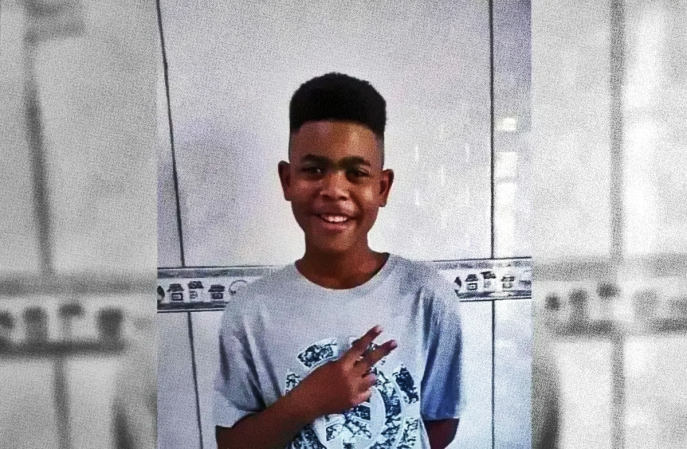
João Pedro Matos (age 14) killed at home by police in Rio de Janeiro in 2020.
Amnesty International ‘is perplexed’ by the decision handed down by Rio State’s Court of Justice to acquit three policemen for the murder of 14-year-old João Pedro Matos. ‘It sends the message that favelas are territories of exception where any death caused by police action will remain unpunished.’ At the time, the house where João was playing with friends was surrounded and shot at by police, according to family members and teenagers who witnessed the crime. After the killing, the victim’s body was flown out on a police helicopter. Over 6,000 people a year are killed by police in Brazil every year.
June 2024
Insight Crime states that ‘Killings by police rose sharply in the state of São Paulo in the first two months of 2024, as authorities continue to rely on repressive tactics to try to curb crime, a strategy that has yet to produce any long-term results.’ Police killings increased by 94% to 134 in the first two months of 2024. An investigative report by the São Paulo Police Ombudsman accused police of five extrajudicial executions since January, as well as torture and home invasions. The Ombudsman has described the operation as displaying “tones of revenge.”
May 2024
Amnesty has submitted its Brazilian report to the UN Committee on the Elimination of Discrimination on Women. This submission raises concerns of gender-based violence against Black women and other women of African descent, the impact of the “war on drugs” on black women’s lives and motherhood, and their sexual and reproductive rights. Groups of women, mostly black, who have lost their children to police violence are constantly threatened. Abortion is unlawful unless the result of rape and 483 women died from unsafe abortions in public hospitals from 2012 to 2022.
April 2024
Amnesty International Brazil remembers the 60th anniversary of the military coup d’état which brought 21 years of military dictatorship to Brazil from 1964 to 1985. In the 1970s Amnesty documented 1,081 victims of torture and 472 perpetrators and documented the situation of 119 political prisoners. Letters exchanged between one of the political prisoners and a Swedish member of Amnesty International were used in the 1988 film Fico te Dendo uma Carta sobre o Brasil (I owe you a letter about Brazil ).
March 2024

Johnatha de Oliveira Lima, killed by police, Rio de Janeiro in 2014
Amnesty International announces that ten years after his killing by Military Police in Manguinhos, Rio de Janeiro, a Military Policeman will face trial by jury from 5 March. Johnatha’s mother, Ana Paula, has been campaigning for justice and came to the UK in 2015, where Richard accompanied her and others to meet the Brazilian ambassador to London. Amnesty notes that the police in Rio kill someone every 8 hours and 48 minutes.
Statista reports that the police in Brazil killed 6,133 civilians in 2023, a small reduction from 2022. This compares to the 173 police officers who were killed in 2023. While the vast majority of those killed by police were Black, the absolute proportion is unknown as some states do not report the ethnicity of those killed.
February 2024
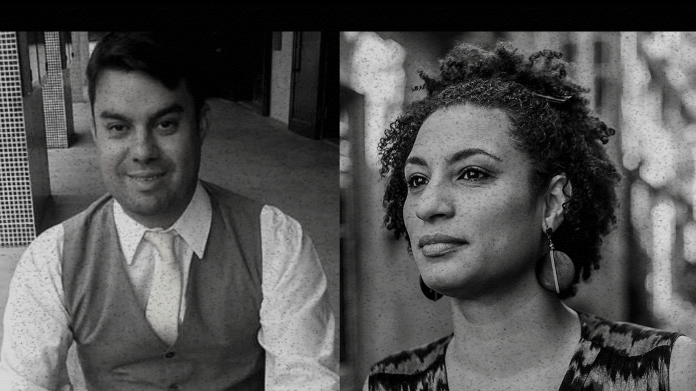
Marielle Franco and Anderson Gomes, killed by police in Rio de Janeiro 14 March 2018
Amnesty International has reiterated its demand that the killers of the human rights defender and politician Marielle Franco and her driver Anderson Gomes be brought to trial, almost six years after the assassination. Two policemen have been held in custody since 2019, with one of them confessing to the crime in 2023. The delay is related to the investigation into who ordered the assassination. 24 January, amid rumours that they are offering a plea bargain to the second killer, the outgoing Justice Minister refused to say if this was so.
January 2024
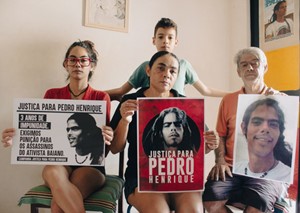
Brazilian activist Pedro Henrique was shot dead, aged 31. From L-R: Pedro’s sister, cousin and mother and father.
Four years later, the police officers suspected of Pedro’s killing are still on duty and a trial has yet to begin. Pedro’s mother, Ana Maria Santos, centre, is bravely fighting for justice for his death. She has received death threats. Pedro and Ana Maria are part of Amnesty’s annual Write for Rights campaign. Please take action and support Ana Maria in her fight for justice. You can listen to Ana Maria talk about Pedro in this video clip with English subtitles. The Brazilian police killed 6,400 people in 2022.